Field report · Draft
I Wanted an Agent That Could Help With Everything. I Ended Up Fixing the Data First
How a simple idea, an AI agent for any company, turned into months of work on files, permissions, backups and the discipline around the model.
 Kamel Dhakwani2026-08-18 · 4 min read
The idea was simple, and a little naive. I wanted an agent that could help with everything.
So I went to see companies and ran working sessions with their teams, almost on request. We would sit down, pick a task that wasted their time, and work through it together. With Claude, with ChatGPT, or with OpenClaw running on one of their computers, a lot could already be done.
In the room, it worked. People were impressed, and some of them were a little unsettled. Then, at the end of almost every session, someone would ask the question that changed the whole project.
"OK. But how does it get to our files?"
The model was never the problem
An assistant is only as useful as what it can see. Used by one person, it works with whatever that person pastes into it. A company is a different matter. Its knowledge sits in shared folders, mailboxes, accounting software and the heads of three people who have been there for years.
For an agent to be useful at work, that data has to be connected, and connected properly. The right person has to see the right things, and nobody else. No model release changes that.
What I found when I opened the cupboard
I had assumed the data would be there, waiting to be plugged in. What I found surprised me.
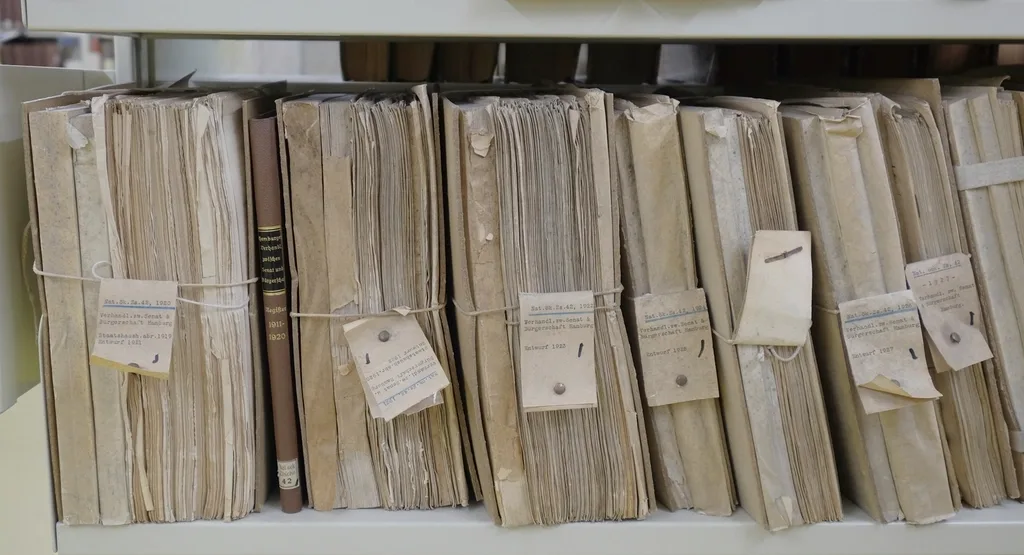
Most of the small and mid-sized companies I visited were not really on Microsoft 365 or Google Workspace, even when they were paying for it. The licences existed, and the organisation did not. Documents lived in personal folders, on individual laptops, or in shared spaces nobody had ever structured. In many places there was no backup at all.
You cannot connect an agent to a filing system that does not exist.
Even with a client who had a real setup, the details were humbling. The folders we first connected turned out to be people's personal working folders, when what we needed was a clear place for what belongs to the company. Access was read-only by default, so an agent could look at a document and do nothing with it. A single missing administrator consent could block an entire team.
So without really deciding to, I stopped working on an agent and started working on foundations: tenants, folders, rights, backups. Each company needed the same things put in order before anything intelligent could happen.
From an agent to a harness
Then came the agent itself, and a second lesson.
In the first version, the agent decided everything alone, guided by instructions. I asked it to change one price in a spreadsheet cell. It added two rows. It announced things it had not done. So we added safeguards, twelve of them in a single week, and each one fixed a case while something else broke.
What came out of those months is the idea I now build everything around. The value is not in the model, which is a replaceable engine. It is in the harness around it: knowing who is speaking and what they are allowed to do, stopping before anything sensitive, recording what happened, and only ever claiming what the system has confirmed.
"Everything" was the wrong ambition
The original idea also had to go. An agent that helps with everything is good at nothing in particular.
A real company has specific shapes. In a franchise network, the same person can be a manager at one site and an ordinary employee at another. Purchasing, audits and site openings each have their own vocabulary, documents and approval chains. None of that can be guessed.
So the approach became one line of business at a time. Make one excellent, then duplicate it. The code stays generic and knows nothing about any client. What changes from one trade to another is the configuration around it: processes, roles, documents and vocabulary. A new company in the same trade no longer starts from zero.
The pilot
Deploying with a pilot client was the real test, and the first sessions were hard to watch. I remember a colleague trying it for the first time and nothing working. Nothing fails more publicly than a demonstration in front of the person who is supposed to use it every day.
What held people back was rarely intelligence. It was friction. A permission that was not ticked by default. Having to go to another screen to approve something, which meant approvals sat waiting for days because nobody went there. We moved those approvals into the conversation itself, because that is where people already were.
Each of those obstacles only became visible by watching someone get stuck.
How it became software
I never set out to build a product. Each company needed something, each need revealed the next one, and I kept building. One day I looked up and what had started as an agent in a working session had become a piece of software, with its own rights system, connectors and processes. Today it is called GhostOne.
I still go back to those first sessions when I think about what companies really need. They were asking for AI. Most of what they needed first was order.
Lessons
- Before choosing a model, look at where your documents live, who can reach them, and whether you could recover them tomorrow.
- A subscription to Microsoft 365 or Google Workspace is not an organisation.
- Test with real requests from real people.
- Put the reliability in the harness, not in the instructions.
- Go deep on one line of business before trying to serve them all.
- Sit next to someone using it, and watch where they get stuck.